Every generation of entrepreneurs believes their boom is different. But markets follow patterns and 2025 is no exception. The AI Startup Bubble is defined by rapid model evolution, a surge of product launches and investors moving quickly to avoid missing the next breakout company.
Founders today are operating in an environment filled with opportunity yet distorted by excitement. Headlines are loud, valuations are inflated and the pace is difficult to sustain.
To build well in these cycles, founders need to understand the forces at work rather than the noise around them.
1. Focus on the AI Startup Trends That Actually Matter
Most startups chase surface level signals during hype moments. Viral demos and social traction rarely translate into long term advantage. The real AI Startup Trends worth following are structural and reveal where lasting value is forming.
Differentiation is collapsing
Many new products rely on identical underlying models. When hundreds of companies use the same technology, the competitive edge moves to proprietary data, workflow innovation, deep expertise and strong distribution systems.
Infrastructure is outpacing applications
Funding flows show where long term bets are being placed. Investors are favouring compute optimisation, data systems and automation infrastructure. User interface driven AI startups often attract attention but infrastructure companies attract capital.
The market is shifting from speed to defensibility
The early rush has cooled. Investors want evidence of real demand, disciplined spending, customer retention and repeatable revenue. Novelty is no longer enough. Fundamentals matter again.
2. Startup Funding in AI Is Strong but More Selective Than Ever
Capital is flowing aggressively into AI yet only a minority of founders benefit from it. The landscape of Startup Funding in AI shows rising totals but higher expectations.
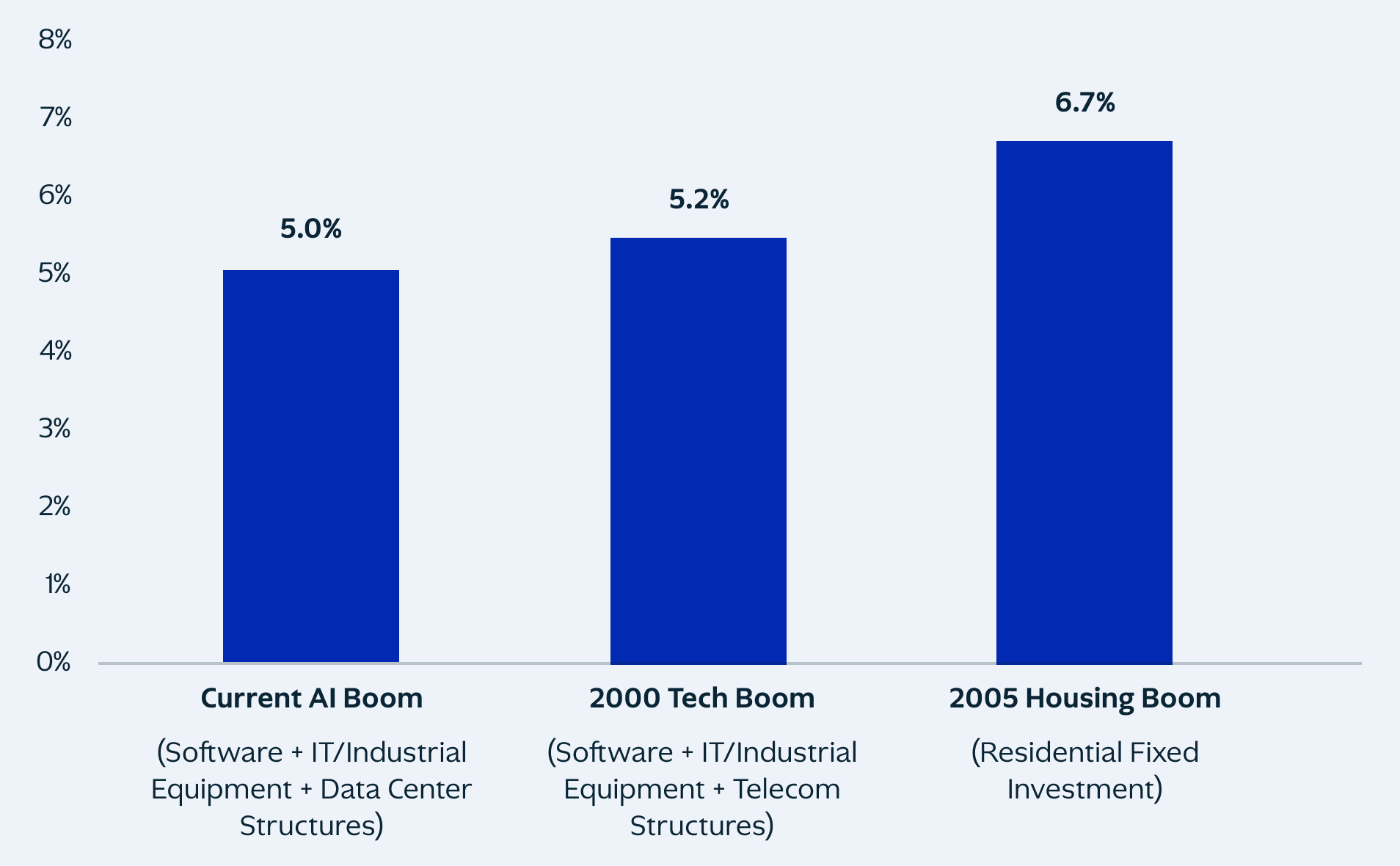
Source: KKR GMAA, U.S. Bureau of Labor Statistics, Bloomberg as of June 30, 2025.
Funding is clustering around infrastructure
The companies receiving the largest rounds focus on reducing compute costs, improving model performance or enabling enterprise scale deployment.
Revenue resilience outweighs novelty
The most successful AI companies today build into essential functions including compliance, finance, operations and procurement. These categories show consistent demand and less volatility.
Disciplined financial management is being rewarded
Burn rates, margin improvements and capital efficiency are under renewed scrutiny. Investors increasingly prefer founders who operate with control rather than those who chase speed.
3. How to Build a Resilient Startup in an Unstable Market
Founders often ask how to build a resilient startup when valuations feel inflated and competition moves quickly. The answer lies in a practical framework focused on durable fundamentals.
Start with a strong operating model
A resilient business is built on simple mechanics including solid margin structure, realistic revenue pacing and measurable priorities. Complexity creates fragility.
Build in markets that remain valuable even when enthusiasm cools
These include:
- Automation for expensive workflows
- Data heavy industries
- AI enabled risk and compliance tools
- Enterprise productivity solutions
- Financial and operational infrastructure
Manage capital with discipline
Capital allocation should be guided by controlled burn, revenue focused timelines, measured hiring and deliberate rather than reactive spend. Longevity becomes a competitive advantage.
Build defensibility from day one
Effective moats include unique data sets, embedded customer relationships, workflow integration that is hard to replace, intellectual property and strong distribution.
Prioritise customer retention over rapid scale
The companies that survive bubbles are the ones customers refuse to abandon.
4. The AI Era Will Reward Operators Who Think Long Term
Bubbles reward experimentation yet they also expose weak fundamentals. The founders who succeed during the AI Startup Bubble will be those who understand real market forces, build for durability, allocate capital intelligently and create defensible value from the beginning.
Founders who understand cycles build stronger companies. If you want practical, finance driven insights on surviving the AI era and scaling with confidence, join the SeatOne newsletter. No noise, only decision making frameworks and strategies that help you operate better.
Sources